Custom Cashmere Sweaters, 9–12 Gauge, from 200 pcs per Colour

100% cashmere, in a flat finish or brushed. Plus two blends where cashmere is one element of the recipe.

Four 100% cashmere styles are in production right now, and one of them is brushed. Composition, gauge, piece weight and indicative FOB price are all listed below.
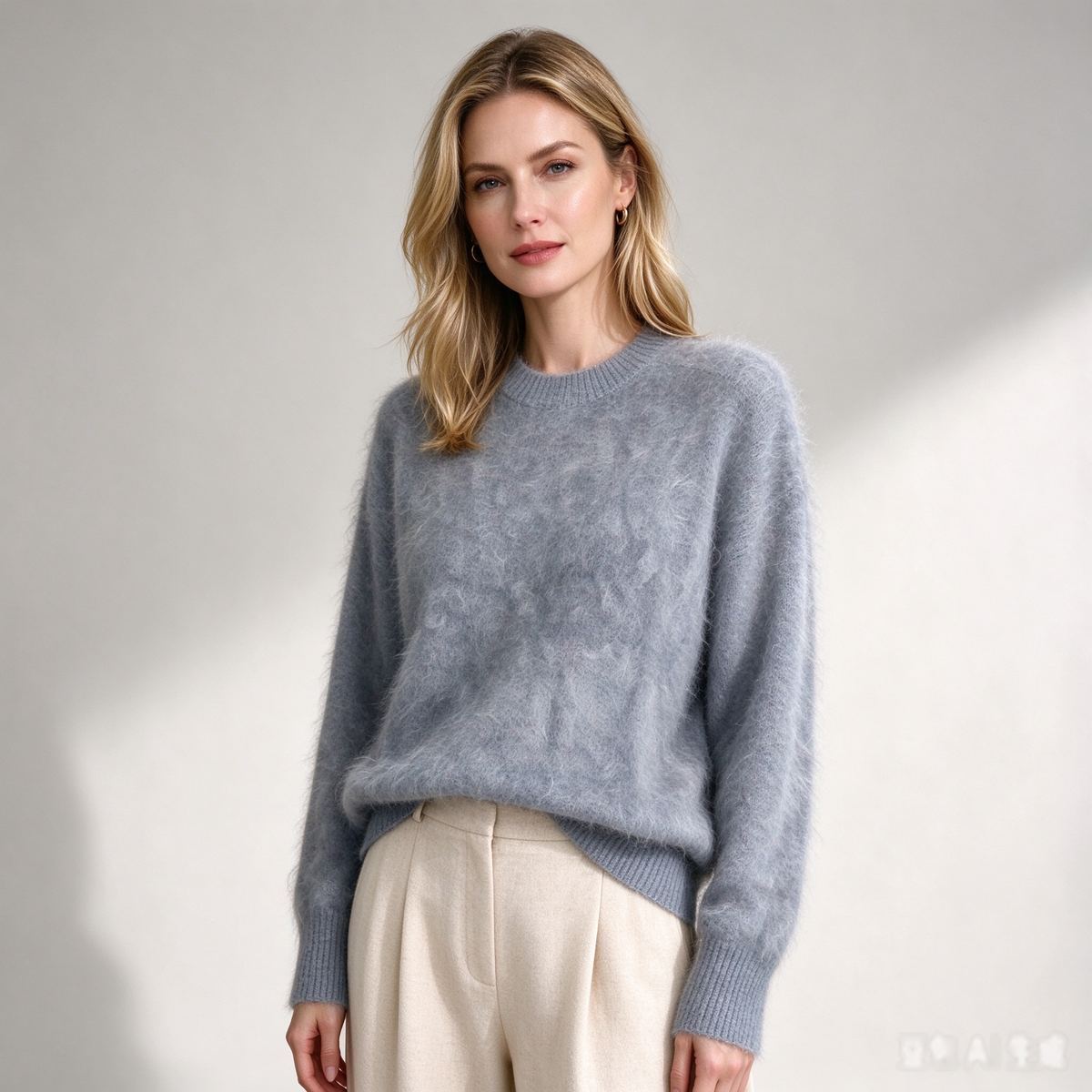
Brushed 100% cashmere sweater, SOFTEX style YRL1190, 9 gauge, 225 g at size M

Style YRL1190 — 100% cashmere, brushed, 9GG, 225 g at size M.

9–12
GG, cashmere
200
Pieces per colour
7–14
Days sampling
45–60
Days bulk

The three things buyers ask first

Answered here, before you have to write an email.

1. Is it real cashmere, and how would I know?

Every style on this page states its fibre content, its gauge and the piece weight at a named size. Those three numbers are checkable: a 100% cashmere sweater at 200 g in 12GG has a fibre cost that a polyester blend cannot hide. If a supplier quotes you cashmere at USD 15 FOB, the composition is the first thing to question.

The yarn is bought by us, not by the factory, and we name the mill and the micron in the quotation. A counter-sample is knitted from that exact yarn before bulk starts.

2. What is brushed cashmere, and why is everyone asking for it?

Brushing is a finishing step, not a different yarn. Wire-covered rollers lift the fibre ends out of the knitted surface and leave a soft pile, so the sweater feels fuller and the colour reads slightly lighter. It is the finish that has moved from outerwear into knitwear this season, and several European high-street labels are running it.

Style YRL1190 below is brushed. The other three are flat-finish, so you can compare the two hands side by side before you decide.

3. What does cashmere cost, and what is the minimum?

Our four cashmere styles run from USD 47 to USD 72 FOB per piece. The spread comes from gauge and weight, not fibre quality. The 174 g 12GG sits at the bottom; the 225 g brushed 9GG at the top.

Minimum is 200 pieces per colour on all four, because we hold colour cards for them. Yarn dyed to your Pantone reference moves to 1,000 pieces per colour.

Brushed cashmere: what the finish does, and what it costs you

Brushing is easy to sell and easy to do badly. Here is what actually happens to the piece.

What brushing does

  • Rollers covered in fine wire draw fibre ends up out of the knitted surface.
  • The surface gains a soft pile, so the hand is fuller and warmer to the touch.
  • The pile scatters light, which makes the colour read a shade lighter and softer.
  • Stitch definition drops. A brushed 12GG no longer looks like a 12GG.

What it costs you

  • Fibre loss. Brushing removes material from the surface, so we knit the piece heavier to land at your specified final weight.
  • Pilling risk. More loose fibre ends means more opportunity to pill. A tighter yarn and fewer passes hold it in check.
  • No reversing. Brushing is not undone. The finish is set once it runs.
  • Colour planning. Because the pile lightens the surface, the bulk shade is approved on a brushed swatch, not on a flat one.

How we run it

The number of passes, the roller pressure and the yarn twist are agreed with you before bulk. Those three settings decide how the surface looks and how it wears. We knit a brushed and a flat swatch from the same yarn so the comparison is on the table, not in a description.

If your own finishing house handles the brushing, we can ship flat and hand over the knitting spec. If we finish it, the brushed approval sample is what the bulk is measured against.

100% cashmere styles in production

Four styles, with the actual composition, gauge, piece weight and indicative FOB price. Quote a style number and we can pull the sample immediately.

Style Composition Finish Gauge Weight Size Indicative FOB
YRL1190100% cashmereBrushed9GG225 gMUSD 72.0+
63030ZR100% cashmereFlat12GG174 gSUSD 47.0+
NZ6802100% cashmereFlat12GG200 gMUSD 48.0+
NZ6803100% cashmereFlat12GG205 gMUSD 49.0+

All four hold a colour card, so the 200-piece minimum applies. Prices are indicative FOB per piece, before negotiation, and assume that minimum. FOB Shanghai or Qingdao; CIF on request.

Where cashmere is part of a blend

These two are not cashmere sweaters. Cashmere is one element, and the main fibre is named first. We list them here so the comparison is honest rather than convenient.

Style Composition Main fibre Gauge Weight Size Indicative FOB
L266590% wool · 5% cashmere · 5% silkWool9GG235 gSUSD 33.0+
10YR7790% merino wool · 10% cashmereMerino12GG220 gMUSD 19.0+

Both hold a colour card. The merino-led styles, including 10YR77 above, are covered in more depth on the merino wool sweaters page.

Gauge, weight and what the number tells you

Cashmere is knitted finer than wool at the same price point, because the fibre cost punishes weight.

Gauge What it looks like Cashmere in this band
5GG – 7GGChunky; visible stitches, heavy handPossible on request, rarely specified — fibre cost per piece climbs fast
9GGMid-gauge; the classic cashmere sweater weight, and the best surface for brushing2 styles, 225–235 g
12GGFine gauge; smooth surface, holds a clean shape under a jacket4 styles, 174–220 g
14GG – 16GGVery fine; lightweight layering, retail-quality finishNot in current cashmere production — ask if your range needs it

Ranges describe what the band is used for. The exact gauge, yarn count and piece weight for your style are fixed in the quotation, against your tech pack.

Yarn, finishing and what gets checked

Cashmere forgives nothing at the yarn stage. The micron and the yarn count are settled before the first stitch.

Yarn specification

Your tech pack states composition and yarn count. We confirm the mill, the micron and the Nm count in the quotation, and the counter-sample is knitted from that exact yarn.

Stock shades come off a colour card. Custom shades are dyed to your Pantone reference, which is where the 1,000-piece minimum comes from.

Pilling, shrinkage, colourfastness

Test targets are agreed against your tech pack rather than quoted as a generic promise. Pre-shipment inspection runs at 80% packing, against the approved sample, by our own QC.

Certification

ISO 9001 for quality management at company level, and a BSCI audit report per knitting factory. Certification documents for the specific fibre in your order can be provided on request.

Certificate numbers are published on the About page; the files themselves are sent on request.

Who actually knits it

Production runs in five BSCI-audited knitting factories in eastern and northern China, with our own QC inspectors stationed inside them and our Nanjing team supervising on site.

How we organise production — and how to verify it.

Sampling, production, terms

Sampling
7–14 days from approved tech pack. Samples are provided free of charge, but the courier cost is borne by the customer.
Bulk production
45–60 days from order confirmation and sample approval. Up to 75 days in peak season, August to October — book two to three months ahead if your delivery lands there.
Minimum order
200 pieces per colour on stock shades; 1,000 pieces per colour for yarn dyed to your Pantone reference. Lower trial quantities are possible at a higher per-piece price.
Payment
T/T 30% deposit, 70% against B/L copy, or L/C at sight. For long-standing customers with a good payment record, we can also offer T/T 30, 60 or 90 days from B/L date, at a correspondingly adjusted price.
Price basis
Prices are quoted FOB Shanghai or Qingdao; CIF on request.
Inspection
Pre-shipment inspection at 80% packing, against the approved sample.

Cashmere questions

What is brushed cashmere?

Brushing is a mechanical finishing step. Wire-covered rollers lift the fibre ends out of the knitted surface and leave a soft pile. The sweater becomes fuller to the touch and the colour reads slightly lighter, because the pile scatters light. It is not a different yarn: the same cashmere is knitted, then brushed.

Does brushing make cashmere pill more?

A brushed surface has more loose fibre ends than a flat finish, so it needs a tighter yarn and a controlled number of passes to stay stable. We knit the piece heavier than a flat version, so the final weight still lands where your spec says. The pilling test is agreed with you before bulk, rather than promised as a generic number.

What is the minimum order for cashmere sweaters?

200 pieces per colour where we hold a colour card, which all four cashmere styles on this page do. A colour dyed to your Pantone reference runs at 1,000 pieces per colour, because the yarn has its own dyeing minimum before the knitting minimum starts.

Why are cashmere sweaters so much more expensive than wool?

The yarn is the reason. Cashmere comes from the undercoat of the cashmere goat, and each animal yields a small quantity per year, so the fibre costs several times what wool costs. The knitting and finishing labour is broadly the same. Our cashmere styles run from USD 47 to USD 72 FOB, against USD 10 to USD 25 for the merino styles.

How long does cashmere sampling and production take?

Sample development 7–14 days. Bulk production 45–60 days from order confirmation and sample approval, up to 75 days in peak season (August–October). Brushing adds a finishing step, not a separate lead-time stage.

Can you knit cashmere in a heavier gauge than 9GG?

Yes, on request. The styles in production here are 9GG and 12GG, but cashmere can be knitted in 5GG and 7GG as well. Heavier cashmere is unusual because the fibre cost per piece rises quickly with weight, so most buyers stay at 9GG and finer.

Send the tech pack, or just the style number

A style number from the table above is enough for us to pull the sample, confirm the yarn and price your colour and size range. Ask for the flat and brushed swatches together if you are still deciding.

Contact Us